Supporting the Arts in Western Massachusetts and Beyond

Showing posts with label Colonial Theatre. Show all posts

July 5, 2023

Review: Berkshire Theatre Group, "Million Dollar Quartet"

Colonial Theater, Pittsfield, MA
through July 16, 2023
by Suzanne Wells
Photo by Emma K. Rothenberg-Ware

"Million Dollar Quartet" is an outstanding theatrical and musical production providing a little comedy, a little drama, and lots of hand-clapping, toe-tapping, finger-snapping music.

Directed and choreographed by Greg Santos, "Million Dollar Quartet" is the story of Sam Phillips, the founder of Sun Records and one night of music magic. The brick curtain rises to display the inside of a recording studio complete with instruments, microphones and a sound booth.

The first half showcases Phillips, played by Zach Cossman, as a practical businessman and savvy talent scout who narrates his discovery of Jerry Lee Lewis, Carl Perkins, Johnny Cash, and Elvis Presley while each performs a Sun Records’ hit, ultimately turning a recording session into a late-night jam session.

The second half of the play takes a dramatic turn. Having sold Elvis’ contract to save Sun Records, Sam Phillips plans to secure its future only to be confronted with the possibility of having to start all over again. Zach Cossman shines during his dramatic monologue soliciting sympathy from the audience as he conveys his disappointment, frustration, and anger. 
Alessandro Gian Viviano’s portrayal of Elvis is the perfect combination of humility, gratefulness, and regret over leaving Sun Records. When the music plays, he becomes the flirtatious, fun-loving, hip gyrating singer that made women all over the world swoon.

Bill Scott Sheets, dressed in black with a deep baritone voice, depicts Johnny Cash as the somber southern gentleman and role model, torn between guilt and desire.

Billy Rude portrays Jerry Lee Lewis “from Ferriday, Louisiana,” with his sarcastic wit, phenomenal piano playing, and performance-yoga, had all eyes returning to him scene after scene.

Colin Summers, as Carl Perkins, provides the sass. His incredible guitar playing and kicks brings Perkins back from the dead. In addition, Colin Summers, as the musical director, crosses every ‘t’ and dotts every ‘i’ in the timing of this ensemble  flowing seamlessly from light jazz background music to major production numbers, fading out during narratives only to coming back swinging, or “shakin’.”

Ultimately the Christmas Spirit prevails, and goodwill wins out. When the story is complete and the audience is on their feet, out comes the cast, dressed to the nines in sequins, to perform a concert of Legends.

Million Dollar Quartet will run at the Colonial Theater thru July 16, 2023.

August 13, 2020

REVIEW: Berkshire Theatre Group, Godspell Under The Tent

Colonial Theatre, Pittsfield, MA
Outside, under the tent, in The Colonial Theatre parking lot
www.berkshiretheatregroup.org
through September 20, 2020
By Stuart W. Gamble

Godspell has been extended from Tuesday, September 8 through Sunday, September 20 at the current open-air tent adjacent to The Colonial Theatre in Pittsfield.

Stephen Schwartz’ timeless musical pastiche “Godspell” is a perfect panacea for our dire times. During this unstable moment of political, social, and most especially epidemic-ravaging unrest, this gentle yet deeply felt mainstay of the American musical theater offers hope. Performed by an extremely talented, youthful cast, this is the first outdoor, professional theater production approved by Actors Equity Association, the professional actors’ and stage managers’ union, since COVID-19 struck.

The outdoor venue is set under a spacious, open tent. The 75 or so in the audience are socially distanced and all are required to wear masks throughout the performance. Sanitizer stands are generously set-up around and within the tent. Restrooms and entrances/exits have two-way traffic patterns, a “new normal” part of life with which we’re well-acquainted by now.


Godspell Under The Tent
The stage itself is a long and wide rectangular, raised platform. Various types of chairs (barstools, beanbag, and director) are set apart six feet or more from each other to allow actors ample space. Tall plexiglass dividers on rollers are also used to separate actors throughout the show. Skeptics might think, how is it possible for actors to truly connect with each other in such an array? The simple truth is: they do. This is totally due to their incredible talent and enthusiasm and by the masterful direction of John Michael Tebelak.

“Godspell” has a very loose structure: a group of young people teach and learn about love, hate, truth, lies, revenge, and forgiveness through parables attributed to Jesus Christ in the Book of Matthew of the Holy Bible. But “Godspell” never has been nor is it now preachy or high-minded. It is light, entertaining, and full of humor and life. In addition, many audience asides and quips are tinged with Corona-era references, making it quite contemporary.

The show is headed by JC himself, played with charm and exuberance by Nicholas Edwards.  From the opening moment singing “Prepare Ye the Way of the Lord” to his final death scene (complete with falling red rose pedals representing his flowing blood), his soaring tenor simply bathes the audience with his charisma. Other highlights include Kimberly Immanuel’s tap-dancing version of “Learn your Lessons Well, ” a bilingual (English/Spanish) version of “Day by Day” sung by Peruvian-American Isabel “Isa” Jordan. Much of the dialogue that is in the hip-hop style of “Hamilton,” stand-up comedy-influenced storytelling (an especially funny Dan Rosales), a gender-reversed rendition of “Turn Back oh, Man” (actor Brandon Lee claims in the song “Social Distancing turns me on”), the lovely “All Good Things”  sung and signed in ASL by Naja Hetsberger, and especially the show-stopping “All for the Best,” in which both JC and Judas (Tim Jones) properly sanitize their hands and props before using them. The actors/singers are ably supported by Andrew Baumer’s musical direction and Gerry McIntyre’s inspired choreography. The actors’ denim-based costumes are quite fitting.

At the play’s start, each cast member presents a short introductory monologue on how they have been affected by COVID-19. The fears, hopes, dreams, and setbacks of these gratefully employed actors present a moving microcosm of our life during this terrible time, but their youth and positivity teach us that there is so much to be grateful for and to look forward to, as well.

July 10, 2019

Review: Colonial Theatre, Rock and Roll Man: The Alan Freed Story

Colonial Theatre, Pittsfield, MA
www.BerkshireTheatreGroup.org
through July 21
by Jarice Hanson

Photo by Emma K. Rothenberg-Ware
With 47 songs and a cast of 19, you might well expect “Rock and Roll Man: The Alan Freed  Story” to be a blast from the past. But despite a competent cast, most of whom recreate rock and roll legends, the weak script vacillates from musical review to biography, to cultural comment on race and teens in the 1950s and ‘60s. The script written by Gary Kupper, Larry Marshak, and Rose Caiola is the problem in this production, and director Randal Myler seems to struggle with trying to find the relevancy in this toe-tapping, hand-clapping review that is fun, but ultimately unsatisfying.

Alan Freed, the Cleveland disc jockey who coined the term “rock and roll” introduced white American teens to “Negro Music” on the radio and launched a number of extraordinary Black performers like Chuck Berry, Little Richard, LaVerne Baker, and Frankie Lyman to the broader audience is a worthy subject for a bio-show. But, his battles with alcoholism, payola, and an unscrupulous business partner are interesting, but underdeveloped.

Alan Campbell, who plays Freed is likable and possesses a beautiful voice in many of the original numbers that bring a contemporary legitimate musical tinge to the story. He is equally well matched by the wonderful Bob Ari in a dual role of the good guy, bad guy business partner who helped Freed along the way. George Wendt, from TV’s “Cheers” fame demonstrates his great timing as J. Edgar Hoover in the “dream sequence” that allows the audience to enter Freed’s delirium before his death.

There are some stand-out performers portraying the recording artists—too many to name, but the quartet who perform as the Drifters and the Platters as well as other, individual artists, weave most of the tunes together throughout the show. Their rendition of “Smoke Gets in Your Eyes” is as close to a showstopper as it gets. Richard Crandle nails his impersonation of Little Richard and connects well with the audience in a “wink and nod” to the original performer who became an icon for flash and fun.

This type of show needs pop, energy, and sizzle, and unfortunately, this production doesn’t rise to that occasion. Music in the pit is provided by an excellent six-piece band led by Dave Keyes, but the tempos seem slow and the volume so even among the musical numbers, that rock and roll of the ‘50s and ‘60s seems nostalgic, but bland.

April 9, 2018

PREVIEW: Berkshire Theatre Group, Che Malambo Dance Company


Berkshire Theatre Group/Colonial Stage, Pittsfield, MA
April 22, 2018

The Argentine based dance company, Che Malambo, excites audiences through precise footwork and rhythmic stomping, drumming of the bombos, and singing and whirling boleadoras (lassos with stones on the end). Presenting a thrilling, percussive dance and music spectacle, the company’s work celebrates the unique South American cowboy tradition of the gaucho. This powerhouse, all-male company of 14 gauchos is directed by French choreographer and former ballet dancer, Gilles Brinas. Che Malambo brings fiery Malambo traditions and virtuosic dancing to the contemporary stage for an exhilarating and entertaining.

Malambo began in the 17th century as competitive duels that would challenge skills of agility, strength, and dexterity. Zapeteo, their fast paced footwork, is inspired by the rhythm of galloping horses in their native Argentina.

For tickets and further information contact the Box Office at 413-997-4444, www.berkshiretheatregroup.org

July 25, 2016

Interview: Kate Maguire, Berkshire Theatre Group


Kate Maguire, Artistic Director/CEO, Berkshire Theatre Group discusses a Decade at the Colonial 
by Shera Cohen 

Located in Stockbridge and Pittsfield, BTG is the home of four theatre venues. This interview with Artistic Director/CEO Kate Maguire focuses on the 10th anniversary of the re-opening of the renovated Colonial Theatre. Built in 1903, the $21million restoration has recreated this exquisite building with its pristine acoustics, classic gilded age architecture and state of the art technical systems to host theatre, family entertainment, comedy, and live music year round. 

Spotlight: Who were performers/plays presented in Colonial’s heyday? 
Kate:  In the early Colonial days, the company presented shows as often as possible. Early shows included Ibsen’s controversial play Ghosts, a cast of 300 in Fifi in the Toy Shop, and Irving Berlin’s premiere of Watch Your Step. The Colonial was a stop in Sarah Bernhardt’s farewell tour. Dancers Martha Graham, Ted Shawn, and the Denishawn Dance Company have also graced The Colonial stage. 

Spotlight: What was the impetus to combining Colonial with BTF? 
Kate:  I had been thinking for some time that it would be healthy to consider collaborations with other organizations in the area. However, I realized that so many of us were duplicating our efforts in terms of administrations, box office, and marketing efforts. I thought, “Perhaps we could work with other organizations to find some efficiencies.”

After 2008, and the economic downturn, I became much more active in looking for partnerships and collaborations. I happened to walk into The Colonial and met with two wonderful trustees. At that point, their board was looking for a new executive director.

We began a conversation about what it might look like for the organizations to truly be partners. After conversations with BTF’s board, the community and civic leaders, we determined that this would be the way to bring two historical theatre organizations together, and create art for a theatre community year-round. 

Spotlight: To what degree was Berkshire Theatre Festival (BTF) involved in renovation of the Colonial? 
Kate:  Berkshire Theatre Festival supported the renovation. I was on the original Board of Trustees for The Colonial. We were in the very early stages of thinking about what that theatre would mean to a community.  

Spotlight: What is the mission of Colonial? The same as BTF? 
Kate:  The mission of the Colonial has always been very similar to the Berkshire Theatre Festival; our goal is to present great work, and to make sure that while we’re presenting that work on our stages, we are being mindful of what it means for a not-for-profit to support the creative vitality of a community. The heart of our mission is to educate, enrich, and entertain through the art of theatre. 

Spotlight: How are the various venues a good match? 
Kate:  Each theatre is unique. The Fitzpatrick Main Stage (approximately 300 seats), in a historic building, that oozes the feeling of summer theatre. The Unicorn (just over 120 seats), which was more recently built, is an intimate space. The Garage, inside of the Colonial, is a black box; we can move that area around. The Colonial Theatre itself is over 700 seats, and a beautifully restored theatre—an architectural jewel. 

Spotlight: How do you choose which performances will be mounted at Colonial or the Stockbridge theatres? 
Kate:  The Fitzpatrick Main Stage has always been home for the classics, new plays and plays with large themes. The Unicorn Theatre, is a space for a young generation of theatre makers, as well as more experimental work.

The Colonial was built by a community, so people would have a creative home to go to year-round. There are no barriers at the Colonial—I hope there are no barriers to any of our theatres. It’s no less intense in terms of the quality of the work, but more familiar to audiences; Little Shop of Horrors, and musicians and comedians that perform all year-long. 

Spotlight: What are you most proud of that has occurred at the Colonial? 
Kate:  I would say that we are most proud of the development of our Annual Community Theatre Production. Every member of the community is truly making the Colonial stage their own; embracing it, and entertaining. What happens in that room is one giant hug. Young people walk into that theatre as if it’s their own. This year, our Annual Community Theatre Production is the Beauty and the Beast, where 120 talented young performers will take the stage. 

Spotlight: What are future plans? 
Kate:  Future plans for the Colonial always involve making sure that we keep the building in the best shape, and that requires constant fundraising. [Important is] maintaining the structure so that it continues to be as glorious as it looks right now, and is sturdy for the future generations. 

We will continue to expand our education programs. We serve 13,000 school children with a variety of program. We are instituting pre-K programming as well. Our programs are based on language, and helping people to communicate more powerfully. The essence of great theatre is to try to understand each other in stronger ways, and to be able to better listen.

While there’s a goal to always entertain and put on great plays, we take our not-for-profit role very seriously. We know how much effort was put in to all of our theatres, and that as leaders in the community, we have a responsibility to educate. 

Spotlight: Any anecdotes about the Colonial that you’d like to share?
Kate:  The work that we’re doing with youth is transformational. We have young people that we have been working with for a dozen years—they have become the teachers for the new students.

There are a great handful of people that come back to teach, and actors who have been with us for so many years, who regard BTG as their artistic home. There’s a collective sigh that you can hear in the first rehearsal from returning actors that says, “I’m back in the Berkshires, I can breathe. I can create great work because of the environment.”

For more information on the Berkshire Theatre Group visit: www.berkshiretheatregroup.org


August 10, 2015

Conducting from the Pit


Mark Gionfriddo Makes “Mary Poppins” Sing
Colonial Theatre, Pittsfield, MA
August 13 - 23, 2015
by Shera Cohen

“Mary Poppins” kicks up her heels, flies through the sky, and brings joy to the Banks’ family in Berkshire Theatre Group’s 10th Annual Community Theatre production, to take place on the stage of the Colonial Theatre.

This community event brings together children and adults who have learned from each other all in the midst of collaboration and creativity. One of the creative leaders of this production is musical conductor Mark Gionfriddo.

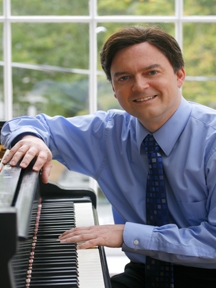
Mark Gionfriddo, a native of Holyoke, is well known as an accomplished pianist, accompanist, composer, arranger, and musical director.

He started piano studies at the age of four, began performing at six, and directed his first musical project at 12. Mark received his Bachelor's Degree in Piano from Skidmore College and Masters Degree in Accompanying from UMASS/Amherst. He has been based at Mount Holyoke College since 1986 where he is a Senior Instructor in Jazz Piano, Director and Founder of the Mount Holyoke College Jazz Ensemble, and Music Department Staff Accompanist.

In the Spotlight spoke to Mark about his latest project -- “Mary Poppins.”

Spotlight: Why do you enjoy working on "Mary Poppins"? 
Mark: I loved the film as a kid growing up, and it's fun to recreate that film live on stage. It's also the annual Community Show here, so I get to work with young kids, teenagers, college apprentices, and adults -- an unusual opportunity to create a multi-generational performance piece.

Spotlight: Tell us about rehearsals.
Mark: We start with a vocal and dance warmup, then I might teach a song, and my directing colleagues will choreograph or stage it. After several weeks and the end of the rehearsal process, we do full run through every night. We have been doing runs for a few weeks now. It's amazing to see the growth over time.

Spotlight: Is “Mary” a musical just for kids?
Mark: One would think so, but there's something in it for everyone. After all, at the bare bones, it's about a family that has lost its way. Mary teaches the adults to learn how to have fun, and the children how to behave more responsibly. And the song "Feed The Birds" is at the heart of the show: a plea for charity towards animals and other humans.

Spotlight: What is the most difficult song? Easiest?
Mark: Playing “The Game” is very difficult and can be vocally throaty. It's also quite the scary number -- the toys revolt after being treated badly. The easiest song, I think, is Supercalifragilistic... although the 'sign language' that the actors do is pretty intense.

Spotlight: Who makes up your band?
Mark: The band is a combo of professionals and teachers. We have a few members who have been in almost every community musical since they began. And we have a few newbies who are joining us for the first time.

Spotlight: How did you get started in this work? 
Mark: I've always enjoyed 'show playing' (I had an affinity for playing musical scores) and learned how to do it myself, with no real mentors. Musical theatre is not as far removed from solo or choral singing as one might think. I've been fortunate to work in many genres -- I began with classical music, then branched out to jazz piano.

Spotlight: What is your day job? Is it music?
Mark: It is my day job! I consider myself pretty lucky.

Spotlight: Any thoughts about the rehearsal process that are important?
Mark: The only wisdom I'd like to offer is that the rehearsal process will go smoothly if everyone allows themselves to make mistakes. It's important to try things and take a chance. Great things will happen if one does this. 

For information about “Mary Poppins,” check www.berkshiretheatregroup.org.

May 16, 2014

Justin Hayward


Colonial Theater, Pittsfield, MA
May 15, 2014
by Eric Sutter

 A wonderful evening of mellow music delighted fans of the legendary front man Justin Hayward of The Moody Blues fame. Hayward was on a solo acoustic tour in support of his latest "Spirits Of The Western Sky." His opening gig of his tour, at the beautiful Colonial, featured a young finger-style guitarist in Great Britain's Mike Dawes. His virtuoso guitar strumming combined Celtic and folk in a instrumental. His original song, "The Impossible," proved an energetic fusion. His unique playing on acoustic guitar transformed Gotye's pop song "Somebody I Used To Know."

 Next up, Justin Hayward was joined by Dawes and accompanied by keyboardist extraordinaire Julie Ragins on back-up vocals. They performed early Moody Blues hits, "Tuesday Afternoon" and "Lovely To See You," with back-drop scenery of a soothing setting sun on water. In impressively amazing voice, Hayward performed "In Your Blue Eyes" which inspired his latest recording. Dawes played the first of his many electric guitar solos. Ragins' magical dream-like keyboard sound colored "The Western Sky" with a sweeping majestic call to adventure about the music that came from the West that inspired Hayward.

Familiar songs such as  "I Dreamed Last Night" and "New Horizons" were well-chosen companion pieces in romantic song ballad form. The night's music was reflective and serene with a mix of Moody Blues and new songs. "The Eastern Sun" was a beautiful and gentle love song by Hayward. The hypnotic keyboard work captured a ethereal heavenly background sound. "Your Wildest Dreams" brought an excited audience response as the lyrics added sweet memories of mid-80's Moody Blues with soaring vocal harmonies. As the concert ended, a compilation of contrasts was heard. The wistful and bittersweet "Forever Autumn" with heartfelt acoustic guitar by Dawes was follow by Haywood's rapid acoustic guitar prelude to "Question."

The beloved "Nights In White Satin" became a warmly sung audience favorite. As Dawes soloed in finger picking style, the stage light background turned blue. Hayward and company encored with the hopeful pop hit of love and longing in "I Know You're Out There Somewhere" for a fountain of youth effect.

July 11, 2013

Oklahoma!

Colonial Theatre, Pittsfield, MA
www.berkshiretheatregroup.org
through July 20, 2013
Photo by Abby LePage

July 12, 2012

A Chorus Line

Berkshire Theatre Group
Colonial Theatre, Pittsfield, MA
www.berkshiretheatregroup.org
through July 21, 2012
by Amy Meek

The Berkshire Theatre Group’s presentation of “A Chorus Line” is filled with high energy and emotion as its cast takes over the stage during the opening sequence. Within the first few minutes, the audience finds itself immersed in the world of a dance audition complete with the tension, competitiveness and even humor of the experience. On the stage are nameless people. Only as the show goes on does the audience see a glimpse into the characters’ inner selves, which is the beauty of this musical.

The original production was created, directed, and choreographed by Michael Bennett, a dancer/director who wanted to make a show by dancers about dancers. “A Chorus Line” was immensely successful, winning nine Tony Awards. This production recreates the essence of the original, while giving it a fresh look through updated costumes and interpretation.

The cast works together beautifully as an ensemble. There is no one star, although there are certainly some standout performances. Natalie Caruncho (Diana) gives a nuanced portrayal of the spunky, idealistic Puerto Rican dancer. Matthew Bauman (Mike) and Neil Totton (Richie) wow the audience with strong technique and bravado in their solos. Eddie Gutierrez (Paul) delivers his intense monologue with strength and ease of emotion. Nili Bassman (Cassie) is stunning as she sings her difficult “Music and the Mirror” number, fighting for her place on stage. Noah Racey (Zach) holds the show together with his intensity and authority as he manipulates all of the dancers during the course of the audition. There are too many individual moments to mention, but every performer is given a chance to shine.

The choreography by Gerry McIntyre, a mixture of the original and new material, is spot-on and executed well by the dancers, especially the “Montage” and “Finale”. The vocals, directed by Steven Freeman, are also very strong. As a whole, Eric Hill’s direction of the show allows the dancers’ individual stories to shine through in the songs and dances. While an amazing spectacle to watch, the show is also introspective as it deals with the many issues dancers face during their struggles to make it in the dance world.

June 29, 2012

Chris Robinson Brotherhood

Sarah Lee Guthrie & Johnny Irion
Colonial Theatre, Pittsfield, MA
by Eric Sutter

Performing songs from their current CD, Sarah Lee Guthrie and husband Johnny Irion hit the Colonial stage, in yet another wonderful Berkshire music concert. They strummed acoustic guitars, accompanied by Charlie Rose's stand-up bass to supply sufficient back up, to their beautiful voices that sounded as one at times. "Speed Of Light" and "Seven Sisters," aided by Irion's harmonica added folk and country elements to the sound. "Hurricane Window," written after Katrina, featured especially fancy guitar. The title cut, "Bright Examples" told a tale of an Appalachian trail hiker, which combined a bright melody and vibrant harmony singing. The song had a pop sheen that hit.

Groups like Furthur and Dark Star Orchestra have strived to keep Jerry Garcia's vision alive. In 2011, Chris Robinson Brotherhood began a similar quest and now comes their debut CD, "Big Moon Ritual." It is a new cosmic California sound with roots from the jam band grooves of the Grateful Dead. Robinson rocked tomorrow's blues with a 5-piece rock n roll band which featured Adam MacDougall on keyboards and Neal Casal on lead electric guitar. Robinson handled rhythm guitar, and all sang in four part harmony. In their mellow, melodically driven loose style the group performed "Star Or Stone" and "Tulsa Yesterday" from the CD. The Grateful Dead's "Brown Eyed Woman" was perfect company here. Robinson, et al, interpreted "Blue Suede Shoes" in their different but cool style with keyboard flourishes and the familiar "Go Cat Go!" vocal chant. Casal's slide guitar glided through "Never Been To Spain" and "Rosalee." "Girl On The Mountain" featured a deep blues that mesmerized. Casal's earthy guitar style channelled Garcia in many shades of blue.

Dylan's "Tough Mama" sounded right on with guitar and keyboards interplay challenged to the maximum. The organic "Vibration and Light Suite" received the Grateful Dead treatment with a relaxed but rollicking guitar solo. "Sunday Sound" was a great closer with Robinson's vocal, "Like water underground, we will find our way." MacDougall's syncronized keyboard solo sounded like water swelling up and building momentum as it flowed. The music bended, accelerated and crescendoed until it eventually descended. Casal's white hot warm guitar lines were interwoven between Robinson's vocals and the laid-back mellow groove of the rhythm section. As for the audience... imagine dancing bears everywhere!

May 3, 2012

Bob Weir Solo Acoustic

Colonial Theatre, Pittsfield, MA
www.colonialtheatre.org
by Eric Sutter

"Lay your burdens down" was the general feeling present at Colonial when Bob Weir's Solo Acoustic Tour came through Pittsfield. The performance had been postponed from last August, so a mighty anticipation was obvious. The legendary rhythm guitarist from The Grateful Dead performed in an intimate living room style setting, making use of his devoted following who sang, danced and clapped along to nearly every song.

Weir opened with his own "The Music Never Stopped," which sounded powerfully good. The warm receptive audience shined the lights from cell phones and captured his image in photo. He was barefooted and humble as he passed a nod of recognition to Bob Dylan with a rendition of "Maggie's Farm" on bottleneck slide guitar. The Marty Robbins cowboy tale "El Paso" was an unexpected treat. He followed with other tales such as the sparse sadness of the Dylan lament "Desolation Row" and continued in a similar vein with the traditional murder ballad "Frankie and Johnnie" which featured nimble guitar playing.

Strangely, the fire alarm in the Colonial went off, and audience members were told to evacuate until the Fire Department could check things out. After 20 minutes, Weir resumed. In spite of the interruption, he kept it rolling along with the mellow sing-a-longs "Artificial Flowers" and "At The Festival." The crowd was enthusiastic and full of song and dance. Some looked like open -handed human umbrellas as they praised the sound with hundreds of parachuting memories.

An intricate guitar instrumental became another vehicle for celebration and set up the classic "Cassidy." The collective consciousness of the Dead Head audience was placated by the opening acoustic guitar chords of the Beatles "Dear Prudence." The joyously visceral Bo Diddley beat of Buddy Holly's "Fade Away" had the put the audience in Weir's hands. In loud unison, the audience became a boisterous chorus. The fluttering farewell was like some low voltage charge of electricity. "Brokedown Palace" tapped into a secret place of coagulated energy. The tribe went out happy.

August 13, 2011

Tommy Tune: In Steps With Time

Colonial Theatre, Pittsfield, MA
www.thecolonialtheater.org
August 11, 2011
by Vickie Phillips


An extremely talented and most engaging Tommy Tune commanded the stage at The Colonial Theatre with his celebration of 50 years in show business. Tune's performance was his broadway biography in song and dance, with the backing of the top-notch, never miss a beat Manhattan Rhythm Kings Band.

From the first "Steps in Time" to the finale, Tune stayed "in tune" with his voice and feet in top form. His scripted song and dance routines encompassed a wide range of well chosen musical material that had the audience stamping and cheering for more. His act is so classy and entertaining, the 90-minutes (no intermission) flew by in a flash. Tune's nine Tony Awards celebrate his diverse talents as an actor, choreographer and director.  Broadway accomplishments include "My One and Only," "Grand Hotel," "Will Rogers Follies," and "Nine" to name a few. He has been honored with his own star on the legendary Hollywood Walk of Fame.

In this show, Tune recreated a few of his numerous broadway stage moments with such style and ease. An especially rousing rendition of "I've Got Them Feeling Too Good Today Blues" (Leiber & Stoller) along with a new take on "Madeleine" (Brel), and the poignant "September Song" (Weill/Anderson) took the audience on a thrilling musical journey. Tune is especially associated with the musical number he created, "It's Not Where You Start, It's Where You Finish."

Seeing Tune in action was an experience to remember. He started on top and finished on top. Colonial presented a really razzle-dazzle evening by a masterful performer.

July 12, 2011

The Who’s Tommy

Colonial Theatre, Pittsfield, MA
www.thecolonialtheatre.org
through July 16, 2011
by Dave Chivers


“The Who’s Tommy” opened with a solid performance by a very talented cast. But it leaves an audience wishing for a bit more gritty rock and roll.

The rock opera benefits greatly from a deep ensemble, simple but effective choreography, and a brilliant and artful use of the space venue. The set is simple but ingeniously conceived. A circular projection screen is used wisely to set up and augment the simple story line of the opera.

There is not a weak voice in the cast. All are strong, and the sometimes difficult melodies and lyrics are handled gracefully and with apparent ease by the singers in every role. The voices of the two leads, Randy Harrison (Tommy/Narrator) and Jenny Powers (Mrs. Walker) are especially good.

That simple story line is mainly a device to present the powerful music of the show. The strength of the show is in the music, and the music is professional and polished – often too polished, crying out for grit and guttural power. The music wants to be visceral, tense, teetering on the edge of maniacal. But despite the obvious skill of all the principal singers, most don’t go there. Angela Robinson (Acid Queen) is an example. She has a great voice, sings smoothly and strongly, but in her signature song she should seethe with pent up rage. It is the same with most of the principals.

The polish that limits the main roles conversely works marvelously for the ensemble. They are, as a group, strong, their numbers lively. The shining moment of choreography is the too brief sequence where the ensemble becomes the pinball machine Tommy is playing, complete with a cast member bouncing back and forth as the pinball.

The band reflects the overall production, accomplished and smooth, but wanting a little more pounding bass, edgy guitar soloing. All the elements are there for a powerful show if the actors lose themselves a little more in their roles, press it more to the edges and think less of the musicality itself, the show would take off. And it well may as the run goes on and they grow more confident in their parts.

April 22, 2011

John Hammond/Dan Hicks & The Hot Licks

Colonial Theatre, Pittsfield, MA
www.thecolonialtheatre.org
April 18, 2011
by Eric Sutter


Two American figures of acoustic roots music shared a double bill at Colonial Theatre. Steady grooves were evident in both John Hammond's acoustic blues, as well as Dan Hicks' quirky brand of acoustic Americana which lent itself as much to swing as to twang. Hammond appeared solo with his guitars and harmonica. He interpreted blues standards, gut bucket boogie, country blues, and his original blues compositions about love gained and lost through the complex narrative of his own wayward soul. His Delta inspired songbook included Robert Johnson's "Come On Into My Kitchen" and Muddy Waters' "I Can't Be Satisfied." He translated the intensity and authenticity of blues classics "When Things Go Wrong (It Hurts Me Too) and "That's All Right." The blues are a living, breathing, and feeling thing and Hammond, now in his 50th year on the road, is a legendary master at live performance. His own songs, "You Know That's Cold" and "Heartache Blues" captured the loneliness of the blues soundscape. His resonator slide guitar echoed nicely. Incidentally, Hammond is up for induction into the Blues Hall of Fame on May 4th.

Dan Hicks' music encompassed a vast body of swingin' country and blues tunes which he dubbed "Caucasian Hip Hop." A phenomenal showman with a flair for absurdity, he performed in a laid back vocal style with The Hot Licks and The Lickettes. The female duo Lickettes provided their sweet background harmonies and percussion to many of his "Tangled Tales" which is the title of their latest CD. The amusing songs, "The Piano Has Been Drinking," "Along Came the Viper," and "I Scare Myself" were fitted with the snuggly warmth of castenets, finger cymbals and Benito Cortez's smooth violin. Clever arrangements of "Waitress in the Donut Shop" and "I Feel Like Singing" featured scat singing by the Lickettes. Hicks, voice is not to be downplayed... he sang the groove out of "Payday Blues." They finished with "Can Music." A raucous call for an encore led to a jivin' "The Buzzard Was Their Friend." 

January 31, 2011

Sweet Honey in The Rock

Colonial Theatre, Pittsfield, MA
www.thecolonialtheatre.org
January 2011
by Eric Sutter


Hello love! Joy was in the hearts of all at Pittsfield's Colonial Theatre during a strong tower of faith performance by Sweet Honey in the Rock. Their music is rooted in the rich textures of African American legacy and traditions. They possess a stunning vocal prowess that captured the complex sounds of blues, spirtuals, gospel, rap, reggae, African chants, hip hop, ancient lullabies and jazz improvisation. Their collective voices were Accompanied by hand percussion instruments, the collective voices of Sweet Honey became a sound of soulful harmonies and intricate rhythms.

In this 38th season, the group began on a high note with a song about God, "I Believe." Many of the songs that followed were spine tinglers that offered deep spiritual exhilaration from Christian and Hebrew traditions. "I Don't Want No Trouble at the River" was one of these with gospel fervor from the sacred. The earthy soul stirrer, "When I Die" started slowly and built dramatic musical tension to release in the form of a ring shout of pure estatic voice and dance by song's end. Bob Marley's "Redemption Song," with movement in mysterious ways, was an awesome interpretation. Depth of feeling was evident with "Jesus on the Mainline," a soul warmer gospel rave-up worthy of hand clapping and holy ghost two stepping. "Education is the Key" employed empowered messages with wood block percussion that engaged the audience.

Marvin Gaye's "Mercy, Mercy Me" was a quiver of the 70's ecological soul vibe. The five female singers shouted out for higher lessons that the listeners should learn by "Mother Nature." A haunting syncopated Central African rain forest chant transfixed the audience in the sacred, magical and mystical realm with four part in the round singing.

Incidentally, this program was hand signed by Shirley Childress Saxon, who was exceptional at interpreting the words of the songs to the deaf, and educating the hearing audience members that music is a universal language. Her dedication is a bright shining light to humanity. The girls closed with the spiritual healer, "Coming Home One Sweet Day." The encore was the quaking "Down The Road I'll Be Going."

July 31, 2010

Ricky Nelson Remembered

Colonial Theatre, Pittsfield,MA
www.thecolonialtheatre.org
July 30, 2010
by Eric Sutter

The identical twin sons of teenage rock n' roll idol Ricky Nelson replicated that charismatic thing the "Irrepressible Ricky" had in his day. Interspersed with video clips of nostalgia and family photos from the "Adventures of Ozzie and Harriett" television show, the Nelsons excited the audience. Early hits, "Stood Up," "Poor Little Fool" and Ricky's first hit "I'm Walkin'" created a magical journey into the past and the collective hearts and minds of an aging baby boomer audience.

The film clip of Ricky Nelson with Elvis caused a stir as the boys cut into "Milk Cow Blues" with drummer Brian Burwell beating the blues on the uptempo Elvis cover. It was obvious he could cut loose on harder edged music. This tribute started March 4th in L.A. to one of the most cherished and beloved artists of all time. It is a multi-media rock n' roll extravaganza touring the world in memory of Ricky Nelson, who died in a plane crash death 25 years ago. The adventure zigzagged through "Believe What You Say" and "It's Late" with exquisite vocal harmonies and fluid guitar solos. Gunnar Nelson led "Lonesome Town" with some fine lead vocals. Both the Rick Nelson penned "Easy To Be Free" and Nelson Brothers 1990 hit "After The Rain" featured soaring but smooth brother harmonies which closed the first half.

They returned with the big hit "Travelin' Man," accompanied by a video clip of the original. "Hello Mary Lou" was a haunted hit sing-along. A devil-may-care style was exhibited with "I've Got A Feeling" which rocked with attitude and a good back beat. This was early rock with powerful vocals and a flashy guitar solo. The film clip from 1971 was effective in setting the appropriate tone for another sing-along -- the country-rock comeback hit "Garden Party." The final film clip of various family memories followed with Matthew Nelson speaking about the importance of family and friends. The closer about the memory of their dad was sung in intimate sibling harmony interplayed with gentle strummed acoustic guitars which conveyed these tender feelings on "Just Once More" about trading everything to see him again.

June 18, 2010

Los Lonely Boys

Colonial Theater, Pittsfield, MA
www.TheColonialTheater.org
June 17
by Terry Larsen

Proclaimed "the best bar band in the world" by mentor Willie Nelson, Los Lonely Boys burst on to the national scene in 2003 with a multi-platinum studio album. Eight recordings later, LLB has established itself as one of the most popular bands of our day. On an evening in June, the "Texican" rock 'n roll trio performed in the beautifully refurbished Colonial Theater to the enthusiastic reception of an adoring audience

Over its history, rock and roll has developed many sub-genres and iconic performers. Some of these, such as the music of Carlos Santana, Jimi Hendrix, fellow Texan Stevie Ray Vaughan, and the influence of blues masters such as Buddy Guy were immediately evident in the performance. As one might expect of musicians from the heart of Texas, elements of Texas Swing and Tejana were also heard. Henry, Jojo, and Ringo Garza point to the influence of their musician father Enrique (Ringo) Garza as their most important and enduring influence.

LLB played for more than 90 minutes without intermission, one piece often blending into the next. The technical proficiency of each player was thrilling, as was their ability to blend the elements of a wide range of styles into a beautifully unified whole. The singing was first rate - Henry and Jojo sharing the leads, all three providing backup vocals; the timbre of each brother's voice so similar as to be nearly indistinguishable. Jojo, the ebullient bassist and MC, charmed the audience with his patter, physical antics, and his virtuosity on a six stringed electric bass. Henry, quietly charismatic, played shredding licks with ease - a powerful lyricism that was breath-taking. Ringo drove his brothers on by providing a sure, vigorous percussive platform for each song. The dynamic range, degree of nuance, and sophistication in the playing must be heard to be appreciated. LLB may have honed their chops in bars, but the lines they played rival anything played by conservatory-trained musicians. It should be noted that the volume of amplified sound was appropriately loud for rock 'n roll, but not painfully so. Los Lonely Boys rocked our world!

March 30, 2010

Roger McGuinn/Tom Rush

Colonial Theatre, Pittsfield, MA
www.thecolonialtheatre.org
March 27, 2010
by Eric Sutter

High spirited feelings of togetherness were experienced at the Colonial Theatre with the appearance of the Godfather of Jangle-Pop Roger McGuinn, who shared a double bill with the pre-eminent singer-songwriter of the Woodstock era, Tom Rush. The spiritually sensitive McGuinn was in fine voice and his special talents of combining the prettiness of folk music with the drive and strength of rock rhythm were evident as he walked out playing the opening riff of "Younger Than That Now" on his Rickenbacker. The folk legend proceded to time trip through, not only his own musical catalog, but the entire history of popular guitar music. He treated the audience to a traditional sea shanty, "Heave Away Johnny" played on his Martin guitar and the first American folk song from 1761 called "Springfield Mountain." He shifted to banjo for "Old Blue" which brought forth handclaps from the audience.

From Woody Guthrie, Leadbelly, and Elvis to the Beatles, he sampled different styles of guitar which culminated in the splendor of the ringing chime of Rickenbacker which colored "Mr. Tambourine Man" and the climatic hits of "Eight Miles High" and "Turn, Turn, Turn." He also performed "Chimes Of Freedom" and the movie anthem, "Ballad of the Easy Rider." His version of an "Irish Blessing" was a soothing closer.

Tom Rush was in awe of McGuinn as he sang "Making the Best of a Bad Situation" to humor the audience about following the Byrds' frontman's performance. Rush also proved to shine in his own way with a mix of songs from his lengthy career. He cooed an Eliza Gilkyson love song with "Fall Into the Night" and Joni Mitchell's "The Urge For Going." He shifted to a gruff bluesy singing style on "Drop Down Mama" and the funny "Remember Blues." Rush then performed the title cut from his new CD "What I Know." The celebration continued with "Let's Talk Dirty In Hawaiian," which set a flutter of laughter through the audience. "These Days" and "A Child's Song" were played warmly on his acoustic guitar. McGuinn joined Rush for a harmonious rendition of "You Ain't Goin' Nowhere." They closed with a gutsy "Driving Wheel" with Rush filling out the bottom with his deep voice. The strong tide of emotions aroused an awakened consciousness and left the audience starry eyed and laughing.

March 7, 2010

The Mikado

Colonial Theatre, Pittsfield, MA
www.thecolonialtheatre.org
March 6, 2010
By Karolina Sadowicz

One of Gilbert and Sullivan's best loved operettas, "The Mikado," is a comic romp set in feudal Japan. It's the tale of Nanki-Poo (John Farchione), a prince disguised as a minstrel, who hopes to marry Yum-Yum (Lauren-Rose King), the beautiful ward and sometime betrothed of the Lord High Executioner of Titipu, the self-involved and cowardly Ko-Ko (Jason Whitfield).

When the Mikado (Andrew Ford), emperor of Japan, demands that Ko-Ko fulfills the duties of his office by actually executing someone within one month, Ko-Ko must find a victim in order to save his own head. Nanki-Poo, who claims he could not bear to live without Yum-Yum, agrees to be beheaded by month's end, as long as he can marry her first. Their scheme is threatened by the arrival of Katisha (Emily Geller), a "cougar" from the Mikado's court who was jilted by Nanki-Poo, and a surprise visit from the Mikado himself.

Mistaken identities, broken hearts, and hidden agendas form this operatic farce, which gleefully makes light of bureaucracy and politicians. Under the direction of Jim Charles, the actors enjoy occasional ad-libs and wink at the audience with jokes about modern politicians, from Governor Peterson, to both Clintons, to Scott Brown, as well as giving nods to the local audience with a few quips about Pittsfield.

The elegant set evokes Japan though screens, red gates, and cherry blossoms, and is dramatically transformed through bold, vivid lighting design. The ensemble is a delight to watch in colorful kimonos, and their vocal performances are superb. Farchione is unassuming and masculine as Nanki-Poo, King is disarmingly alluring as the vain Yum-Yum. Whitfield's Ko-Ko is irresistibly funny and likable despite his cowardice, and quickly becomes the audience favorite. Andrew Lipman is a Falstaffian bureaucrat and earns huge laughs as the corrupt uber-administrator Poo-Bah, insisting on being "insulted" with bribes in order to bend laws and share secrets freely.

Each actor brings excellent vocals and physical comedy to this swiftly moving, delightful production. "The Mikado" is 125 years old, but with modern touches and energy, it thrills and amuses without showing its age.

August 24, 2009

Melanie in Concert

Colonial Theatre, Pittsfield, MA
www.thecolonialtheatre.org
August 21, 2009
by Eric Sutter

Deja Vu... Melanie is back but she never really left. Just like a circle, she came back around to defeat the nay-saying voices of the new century. But first, a new spirit of voices spread their light. As part of the Woodstock at 40 series at the Colonial, Arlo Guthrie's daughter Sarah Lee Guthrie and her husband Johnny Irion performed a short set of singer-songwriter material. "Bright Examples" featured their acoustic guitar strumming interplay punctuated by Irion's clear harmonica solo. "Don't I Fit in My Daddy's Shoes" was inspired by their daughter Sophie. Irion conjured up the romantic Southern imagery of a fisherman's town on his bluesy guitar as they sang "Emily's". They closed with a song about their Berkshires' home, "When The Lilacs Are in Bloom."

An impassioned Melanie appeared on stage with her son Beau Jarred Schekeryk to a warm receptive audience. With Beau on viola guitar and bow and Melanie on fingerstyle acoustic, they performed her debut single "Beautiful People" from Woodstock to unanimous approval. Jess Leary on acoustic guitar joined them for the 1971 hit "Brand New Key". Melanie's songs have positive messages and unique insights from the mystique of the feminine. "Smile" written after 9/11 shined with the light hearted sing-along chorus, "I Love People Who Smile." With loveable disarming humor she belted out "I Tried to Die Young" with Beau as chorus. She sang an emotionally powerful "Love Doesn't Have to Hurt" with a tender viola guitar solo by Beau. "Ruby Tuesday" was a beautiful duet with the audience. After her Woodstock rap, a peace sign appeared on the backdrop as she sang "Summer of Love." Starting in French, Melanie sang "Look What They've Done To My Song, Ma" as she blew kisses to the audience. She rapped about being regarded as the female Bob Dylan. She introduced the song which she sang as the youngest performer at Woodstock. "Lay Down (Candles In The Rain)" was performed during a rainstorm that day and was resurrected at this concert, ironically after a storm in the Berkshires. It's a song with a timeless message...love one another.